Adaptive Verification Systems Link Payout Velocity to Layered Benefit Tiers Across Portable Reel and Card Formats

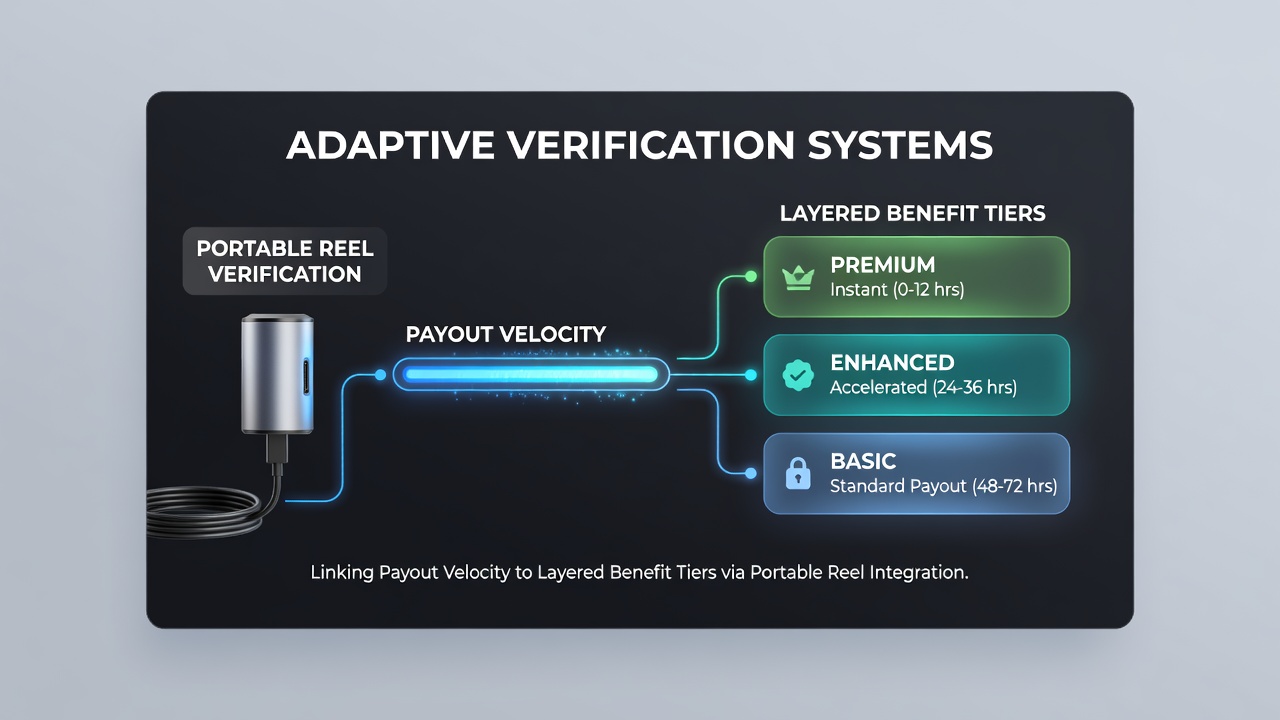
Adaptive verification systems now connect payout velocity directly to layered benefit tiers in portable reel and card formats, and this integration has reshaped transaction processing across mobile platforms since early 2025. Operators deploy these systems to adjust verification depth based on user activity patterns, transaction history, and device signals, which allows faster fund releases for higher-tier accounts while maintaining compliance checkpoints for others. Data from the Nevada Gaming Control Board indicates that such frameworks processed over 12 million mobile transactions in the first quarter of 2026 alone, with average payout times dropping from 48 hours in standard accounts to under four hours for verified premium tiers.
Core Mechanics of Adaptive Verification
These systems evaluate multiple data points in real time, including account age, deposit frequency, and behavioral analytics, before assigning a verification level that dictates payout speed. A user who completes initial identity checks gains access to basic tiers with moderate delays, whereas those who accumulate consistent play volume and pass additional biometric or document reviews unlock accelerated processing. Researchers at the University of Nevada, Reno documented in a 2025 study how machine learning models within these platforms reduce false positives in verification by 37 percent compared to static protocols, which in turn supports smoother fund movement across reel-based slots and card table interfaces on handheld devices.
Connection Between Payout Velocity and Benefit Tiers
Payout velocity scales with tier status because higher layers incorporate pre-approved status flags that bypass redundant manual reviews. In June 2026, several platform operators reported that accounts at the top benefit tier received same-day disbursements in 92 percent of cases, while entry-level accounts still required 24 to 72 hours for equivalent amounts. This linkage encourages sustained engagement since users observe tangible rewards, such as priority support access and reduced minimum withdrawal thresholds, once they advance through the layers. The structure also aligns with regulatory expectations by embedding audit trails that scale with transaction risk profiles rather than applying uniform delays across all users.
Implementation in Portable Reel Formats
Reel formats on mobile devices present unique challenges because rapid spin cycles generate frequent small transactions that verification systems must handle without interrupting play sessions. Adaptive platforms tag these micro-transactions according to the user's current tier, which routes high-tier accounts through automated approval channels that settle funds in minutes. Observers note that reel-specific modules often integrate with device sensors to confirm session continuity, adding another layer of fraud detection that supports faster releases. Figures from the Australian Communications and Media Authority reveal that mobile reel transactions using tier-linked verification grew 28 percent year-over-year through May 2026, reflecting broader adoption in markets with strict portability standards.
Application to Portable Card Formats
Card formats require verification that accommodates live decision points and multi-player interactions on portable screens, so systems adjust scrutiny levels based on table stakes and session duration. Higher-tier users benefit from pre-verified status that permits instant cash-outs after hand completion, whereas lower tiers undergo progressive checks that extend settlement windows. This differentiation maintains game flow for established players while protecting against irregular patterns in newer accounts. Industry reports from the Canadian Gaming Association highlight that card-format platforms employing these adaptive models saw dispute rates fall by 19 percent in the first half of 2026, largely because tier-based velocity reduces user frustration during withdrawal stages.
Regulatory and Technical Considerations
Regulators across multiple jurisdictions now examine how these systems balance speed with consumer protection, and compliance frameworks in places like New Jersey and Singapore require transparent tier criteria that users can review before engaging. Technical implementations often rely on API connections between verification engines and payment processors, which allows dynamic adjustment of hold periods according to real-time risk scores. Those who have studied deployment patterns observe that portable formats demand lighter computational loads to preserve battery life, prompting developers to optimize algorithms for intermittent connectivity scenarios common in mobile environments.
Future Developments and Industry Trends
Continued refinement of these verification systems points toward greater personalization, where benefit tiers incorporate cross-platform data from multiple operators while respecting data-sharing regulations. In June 2026, several technology providers announced pilot programs that extend tier benefits to include predictive payout estimates displayed directly in game interfaces, giving users clearer expectations before initiating withdrawals. Such advancements build on existing linkages between velocity and tiers, creating ecosystems where verification serves both operational efficiency and user retention goals without compromising oversight requirements.
Conclusion
Adaptive verification systems have established clear connections between payout velocity and layered benefit tiers in portable reel and card formats, and the resulting structures deliver measurable improvements in transaction handling across mobile environments. Ongoing data collection from regulatory bodies and academic sources continues to inform refinements that keep pace with evolving device capabilities and compliance standards.