Biometric Authentication Protocols Enhance Access to Progressive Prize Pools in Remote Entertainment Systems
Written by Paul Carter · Aug 14, 2026
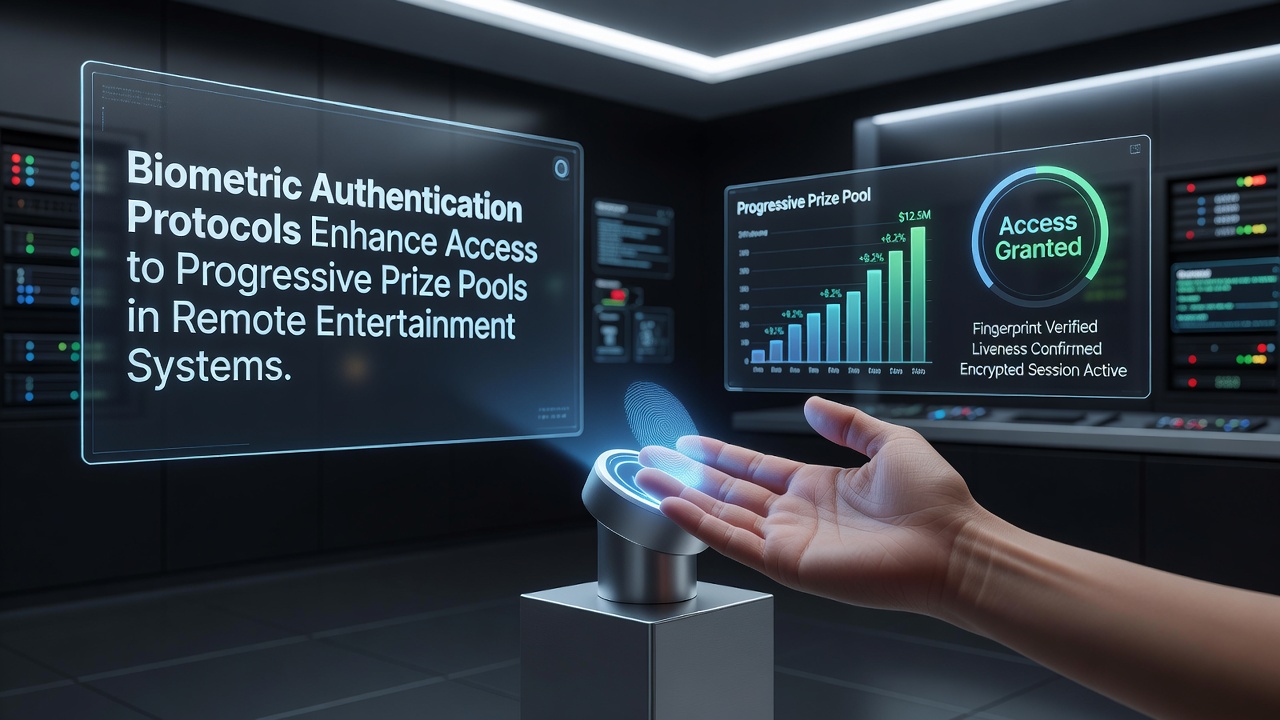
Biometric Authentication Protocols Enhance Access to Progressive Prize Pools in Remote Entertainment Systems
Biometric authentication protocols have become central to how remote entertainment systems manage entry to progressive prize pools, where jackpots accumulate across multiple platforms and players. These systems rely on fingerprint scans, facial recognition, and voice patterns to verify user identity before granting access to growing reward tiers, and data from August 2026 shows increased adoption rates among operators handling wireless table and reel formats. Researchers have documented how such protocols reduce unauthorized entry while streamlining verification steps that once required multiple passwords or tokens.
Core Components of Biometric Protocols in Progressive Systems
Progressive prize pools operate by linking contributions from individual wagers into a shared reservoir that expands until triggered by specific outcomes, and biometric layers sit at the entry point to confirm eligibility without interrupting the flow. Systems combine liveness detection with encrypted templates stored on secure servers, which allows operators to match incoming scans against registered profiles in real time. Those who study these integrations note that multi-factor biometric checks, such as combining facial geometry with behavioral keystroke patterns, create layered barriers that deter account sharing while preserving quick access for verified users.
Hardware sensors on mobile devices capture raw biometric data and convert it into mathematical representations rather than storing actual images, a step that complies with privacy standards across several jurisdictions. In August 2026, industry reports highlighted how these conversions happen within milliseconds, enabling seamless transitions from login to active participation in accumulating pools. Observers have pointed out that fallback mechanisms, including one-time PINs sent to registered devices, maintain continuity when primary scans encounter temporary issues like poor lighting or device damage.
Security Enhancements and Access Efficiency
Security protocols tied to biometrics address vulnerabilities common in password-based systems, where credential theft can expose entire accounts to pool manipulation attempts. Encryption standards such as AES-256 wrap the biometric templates, and transmission occurs over secure channels that prevent interception during the verification handshake. According to figures from the New Jersey Division of Gaming Enforcement, platforms using these methods reported fewer incidents of disputed prize claims in recent quarters.

Access efficiency improves because users bypass lengthy form entries and instead complete a single scan that unlocks their position within the prize structure. Research from academic groups at institutions tracking digital gaming patterns indicates that average session start times drop when biometric gates replace traditional logins. This speed matters in fast-moving environments where progressive pools fluctuate with each wager placed across connected networks, and operators can allocate more resources to monitoring pool integrity rather than identity disputes.
Implementation Across Remote Platforms
Remote entertainment platforms integrate these protocols through software development kits that work with both iOS and Android ecosystems, while web-based versions employ browser APIs for camera and sensor access. Progressive pools benefit when verification happens at the point of wager placement, ensuring only authenticated accounts contribute to and draw from the shared totals. Case examples show operators in North American markets deploying hybrid models that combine device-bound biometrics with cloud-stored reference data, which supports cross-device continuity for players moving between tablets and phones.
Regulatory frameworks in multiple regions require regular audits of biometric storage practices, and compliance teams examine template retention periods as well as deletion protocols after account closure. Data shared by the Australian Communications and Media Authority reveals steady growth in certified systems that meet these benchmarks, particularly those handling large-scale progressive structures. Technicians fine-tune false acceptance and rejection rates during testing phases, balancing security thresholds against user convenience to keep participation rates stable.
Challenges and Technical Considerations
Technical hurdles include variations in biometric accuracy across diverse user populations, where skin tone, age, or physical changes can affect scan reliability. Developers address this through adaptive algorithms that update templates over time based on successful matches, and ongoing calibration helps maintain performance levels. Network latency during peak hours can delay verification, yet edge computing solutions now process some checks locally before syncing with central servers.
Privacy concerns arise around the collection of sensitive data, prompting operators to adopt anonymized logging that separates identity markers from gameplay records. Legal requirements differ by location, with some mandates calling for explicit user consent screens before any scan occurs. Those monitoring the field have tracked how transparent policies around data usage help sustain trust, especially when progressive pools reach high values that attract broader attention.
Conclusion
Biometric authentication continues to shape access pathways to progressive prize pools by combining precise identity verification with operational speed in remote setups. Protocols evolve alongside device capabilities and regulatory expectations, delivering measurable reductions in unauthorized activity while supporting the complex mathematics behind accumulating rewards. As platforms expand their reach in August 2026 and beyond, the focus remains on refining these tools to handle growing volumes without compromising the core principles of security and fairness.