Player Journey Mapping Across Reel, Card, and Real-Time Dealer Options in Digital Casinos
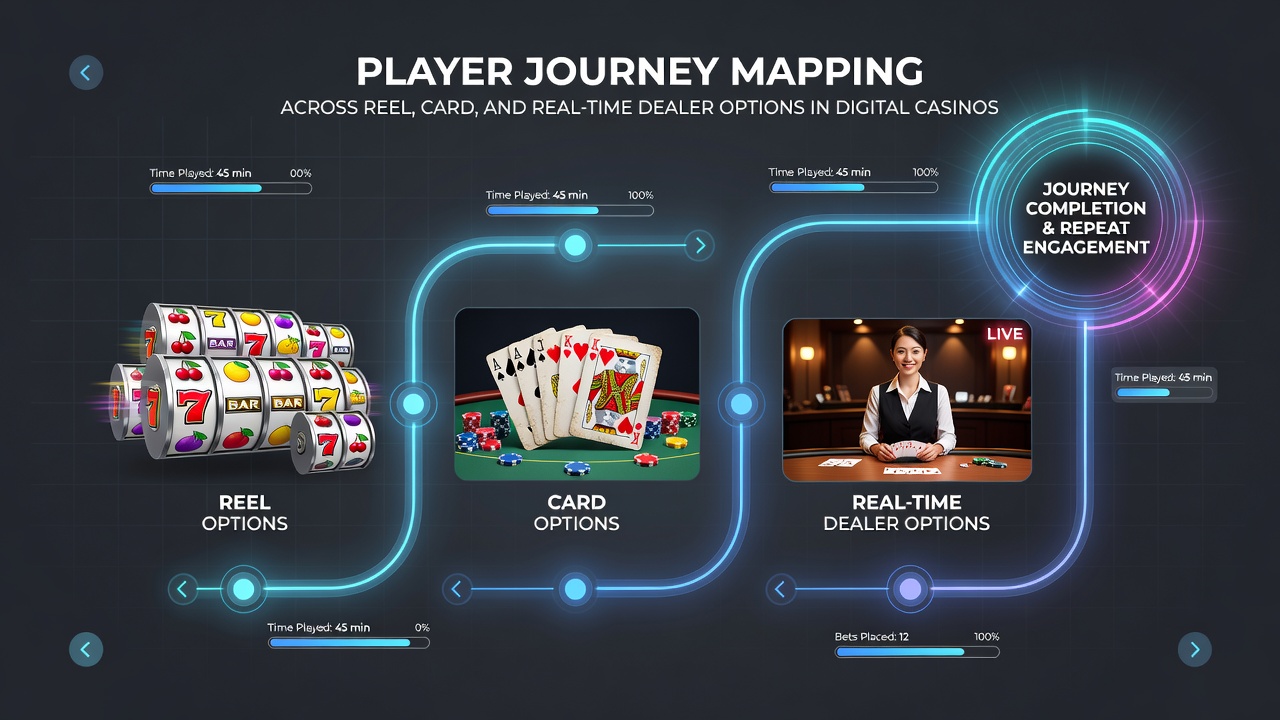
Player journey mapping traces the progression users follow when engaging with reel-based slots, traditional card formats, and real-time dealer experiences in digital casino platforms, and this approach reveals structured pathways that operators track through behavioral data as of June 2026. Researchers at multiple institutions have documented how individuals typically begin with discovery phases on mobile applications before advancing into sustained play sessions that may span multiple game categories within a single account.
Initial Discovery and Onboarding Stages
Users often encounter digital casinos through promotional channels or app store listings where reel games serve as entry points because of their visual simplicity and rapid spin mechanics, yet data from industry reports shows that many quickly explore card-based options once initial deposits occur. Observers note that verification processes integrate across all three formats at this stage, creating a unified profile that follows the player regardless of subsequent choices between automated reels and interactive dealer tables. Those who've examined platform analytics find that completion rates for account setup increase when tutorials demonstrate seamless movement from slot interfaces to card game lobbies without requiring separate logins.
Engagement Patterns in Reel Formats
Reel games attract extended sessions through progressive features and bonus rounds, with journey maps indicating that players frequently return to these titles after brief experiments with card games because of the lower cognitive load involved in spinning mechanics. Studies conducted by university research teams have mapped how session lengths in reel environments average longer on weekdays, while transitions to card formats spike during evening hours when social elements gain appeal. Platform operators use heat mapping tools to record these shifts, documenting the exact moments when users abandon one category for another within the same login period.
Transitions Into Card and Table Experiences
Card formats introduce strategic layers that differ markedly from reel automation, and journey mapping captures how players who start with slots often test blackjack or poker variants after accumulating initial credits. Evidence suggests that tutorial overlays and practice modes reduce drop-off rates during these transitions, allowing users to build familiarity before committing real funds across game types. In June 2026 figures released by regulatory bodies in several jurisdictions, the proportion of accounts showing activity in both reel and card sections exceeded previous quarterly measurements, pointing to increased cross-format exploration.
Real-Time Dealer Integration Points
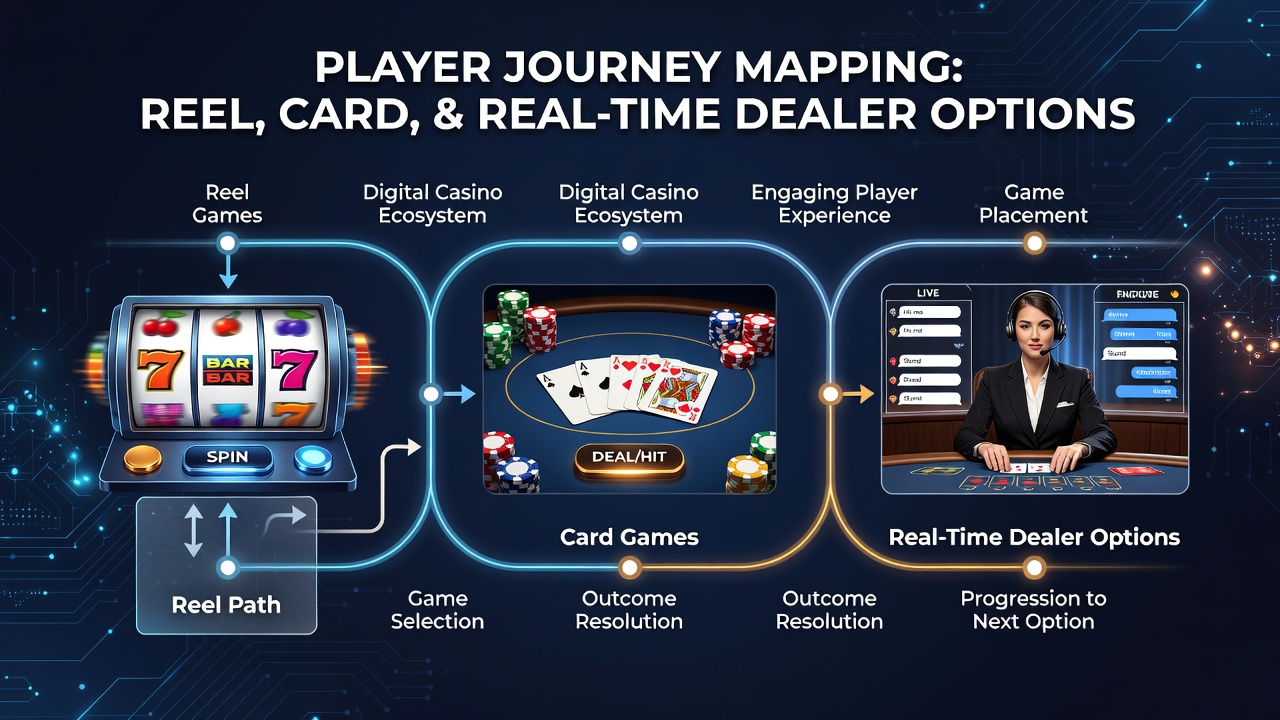
Real-time dealer options add human interaction layers that journey maps position as later-stage destinations for many users who have already sampled automated formats. Data indicates that players who reach live dealer tables often maintain parallel activity in reel games, using the dealer sessions for variety rather than complete replacement of earlier preferences. Those tracking user paths through session recordings observe that chat functions and camera feeds create retention anchors that keep individuals returning across multiple visits, even when they alternate back to card or reel selections during the same evening.
Cross-Format Progression and Retention Mechanisms
Operators apply journey mapping to identify friction points where users stall between formats, such as when switching from reel bonuses to live dealer table minimums requires additional navigation steps. According to research published by the American Gaming Association, integrated loyalty systems that award points across reel, card, and dealer play increase overall retention by linking progress in one area to rewards available in others. Platform developers continue refining these connections through API frameworks that synchronize balance displays and promotional eligibility regardless of current game selection.
Analytical Tools Supporting Journey Documentation
Advanced tracking software records timestamped events across all three categories, generating visualizations that highlight common sequences like reel-to-card-to-dealer patterns observed in aggregated user logs. Experts have noted that machine learning models trained on these datasets predict future transitions with increasing accuracy, enabling preemptive interface adjustments that guide players toward less-explored options. In regions monitored by the Pennsylvania Gaming Control Board, compliance reporting now incorporates journey metrics to verify that promotional fairness extends uniformly across reel, card, and live dealer offerings.
Conclusion
Comprehensive mapping of player journeys across reel, card, and real-time dealer options provides operators with actionable frameworks for platform development while supplying regulators with transparent records of user movement through digital environments. Continued refinement of these maps through June 2026 and beyond supports more precise alignment between game features and documented behavioral sequences observed across diverse player cohorts.